How to Write a Professional Email: 7 Tips That Actually Work
Last Updated on August 5, 2026 by Garima Gaur
Email is still where business actually gets done — deals get closed, projects get greenlit, and first impressions get made, all inside a subject line and a few short paragraphs. Yet most inboxes are clogged with messages that ramble, bury the actual ask, or get skipped entirely because the subject line gave no reason to open them. Effective email writing isn’t about sounding formal or clever — it’s about being the one message in a crowded inbox that actually gets read, understood, and acted on.
Most people never learn how to write an email professionally; they just imitate whatever landed in their own inbox while they were growing up, typos and all. The good news is that better business emails — and better inbox management overall — come down to a handful of repeatable habits, not talent. Here are seven you can start using in your very next message.
Nail the Subject Line First
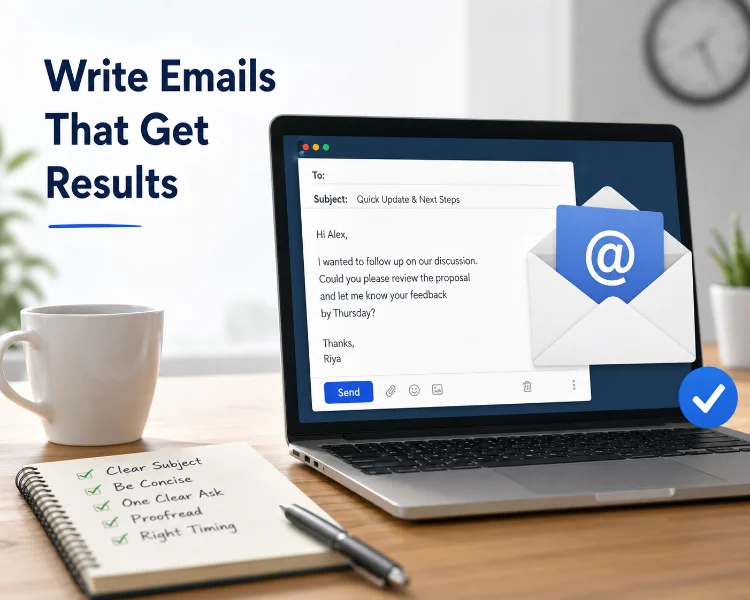
Your subject line decides whether the email gets opened at all. Data from Backlinko and email platforms like ActiveCampaign consistently point to 36–50 characters as the sweet spot, since most mobile inboxes only display the first 33–43 characters before cutting a line off. Put the most important word or ask in the first few words — “Invoice #4521 — approval needed” beats “Quick question about something from last week.”
Lead With the Point, Not the Preamble
Skip the throat-clearing. Busy readers decide whether to keep reading within the first two lines, so state your purpose immediately: what you need, by when, and from whom. Save the pleasantries for a single friendly line, not a paragraph.
Keep It Short and Skimmable
Most business emails should stay well under 200 words. Long blocks of text get skimmed, not read, and important details get lost in the middle. Break the message into short paragraphs (2–3 sentences) and use bullet points for anything with more than two items. Before sending anything longer than a quick reply, it’s worth running it through a Word Counter to see exactly how long it’s gotten — it’s a fast way to catch an email that’s quietly turned into an essay.
Keep Formatting and Capitalization Consistent
Inconsistent capitalization — a subject line typed in ALL CAPS, or headers that mix cases — reads as careless or, worse, like spam. Decide on a style (sentence case is the professional default) and apply it consistently across subject lines and section headers. If you’ve pasted text from another source and the casing is a mess, a Case Converter fixes it in seconds instead of retyping everything by hand.
Write One Clear Call-to-Action
Every effective business email should ask for exactly one thing. Emails with multiple competing requests (“review this, and also can you send the file, and by the way…”) make it easy for the recipient to respond to the easiest item and ignore the rest. If you have several asks, number them, but be clear about which one is the priority.
Proofread Before You Hit Send
A typo in the subject line or an incorrect name in the greeting undermines credibility before the recipient reads a single sentence of your message. Read the email once for content and once more out loud for tone — reading aloud catches awkward phrasing and unintentionally blunt lines that silent reading misses.
Time Your Send for When It Will Actually Be Read
When you send matters almost as much as what you write. HubSpot and CoSchedule data consistently show Tuesday and Thursday mornings as the highest-engagement windows for business email. And if you’re following up on a lead or request, speed compounds: Harvard Business Review research found that following up within an hour of an inquiry increases the odds of success significantly compared to waiting even a few hours longer.
Common Mistakes to Avoid
A few basic email etiquette slips show up again and again in business inboxes — and they’re the fastest way to lose a reader’s attention before they even get to your point:
- Burying the actual request in the third paragraph
- Using a vague subject line like “Follow-up” or “Quick question”
- Writing in a single dense block with no line breaks
- CC’ing everyone “just in case” instead of the people who need to act
- Sending without a proofread pass, especially names and dates
Final Thoughts
Effective email writing isn’t about clever phrasing — it’s about respecting the reader’s time. A specific subject line, a clear ask stated early, consistent formatting, and a single call-to-action will do more for your response rate than any amount of polish. Once you know how to write an email professionally and treat it as a core workplace communication skill, and once inbox management stops feeling like a daily fire drill, email becomes one of your most reliable tools instead of something you dread.
Frequently Asked Questions:
What makes an email sound professional?
A professional email is clear, direct, and correctly formatted — a specific subject line, a stated purpose in the first line, consistent capitalization, and a single clear ask.
How long should a business email be?
Most should stay under 200 words. If a topic genuinely needs more space, consider a summary at the top with details below, or move the conversation to a call.
What’s the best time to send a business email?
Tuesday and Thursday mornings tend to show the strongest open and response rates, according to HubSpot and CoSchedule benchmarks, though these vary by audience and time zone.
Should I use bullet points in a business email?
Yes, for anything with more than two related items. Bullets are easier to scan than a paragraph and reduce the chance a request gets missed.
How do I write a subject line that gets opened?
Keep it to roughly 36–50 characters, front-load the key word or ask, and avoid vague phrases like “Quick question” that give the reader no reason to prioritize the message.
Is it unprofessional to follow up quickly?
No — the opposite. Research on response speed shows following up within an hour meaningfully improves outcomes compared to waiting, as long as the follow-up itself is polite and adds value rather than just nudging.

Garima Gaur is a senior writer and also a renowned guest author on many popular platforms like goodmenproject.com. She loves to write on topics like business, finance, technology, marketing, and many more.